Water Source
The contractor asks whether the water came from a supply line, appliance, roof opening, fixture overflow, groundwater, or storm intrusion. The source affects containment, cleanup, and which materials may remain.
Water Removal · Naples, Florida
Describe the water problem once and get connected with a local contractor who handles removal and drying.
✓Describe the water problem once
✓Connect with a local contractor
✓Discuss removal and drying directly
✓You decide whether to proceed
Extraction, inspection, and drying
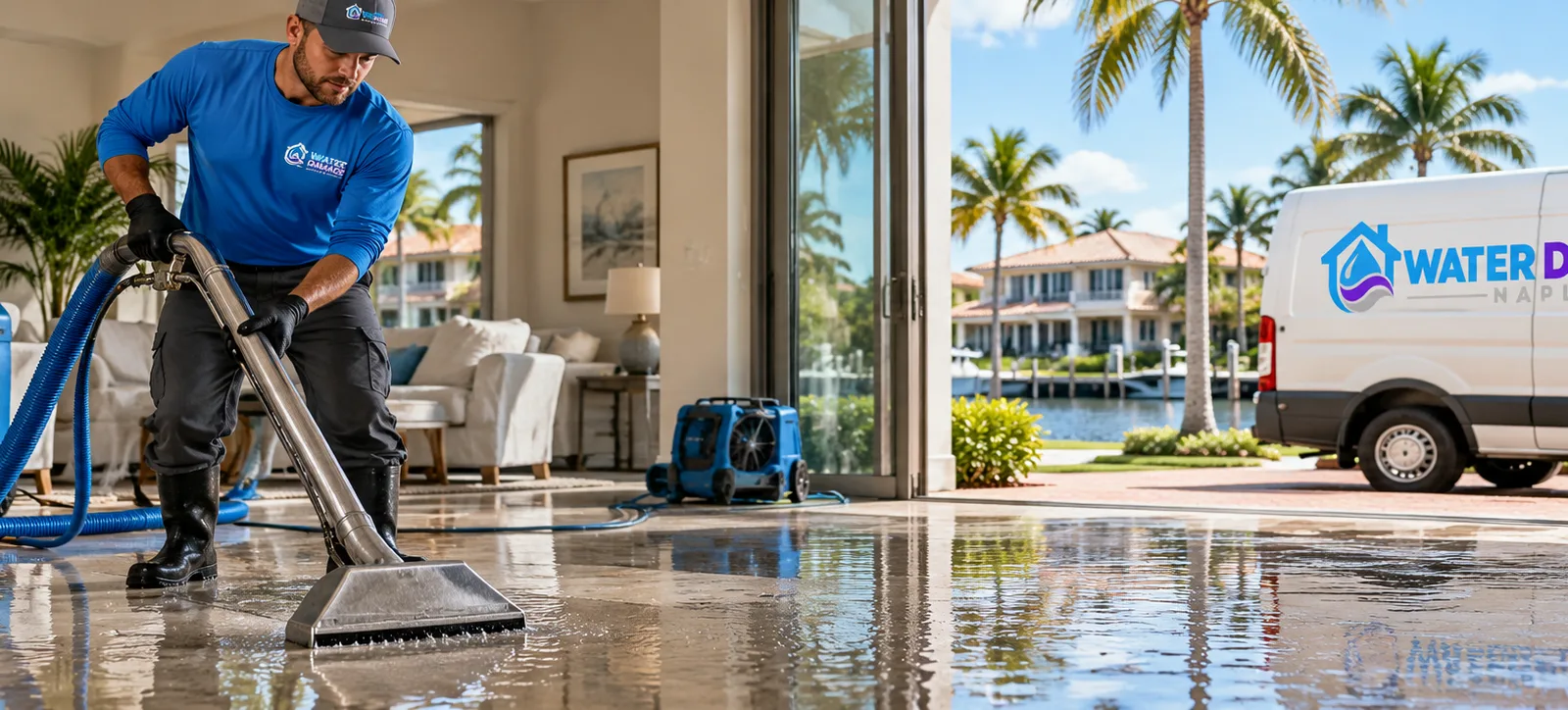
Water removal Naples contractors address standing water and moisture left by appliance failures, plumbing leaks, roof openings, storm-driven rain, and overflowing fixtures. The job usually begins with stopping or identifying the source, checking how far the water traveled, and deciding which materials can be dried in place.
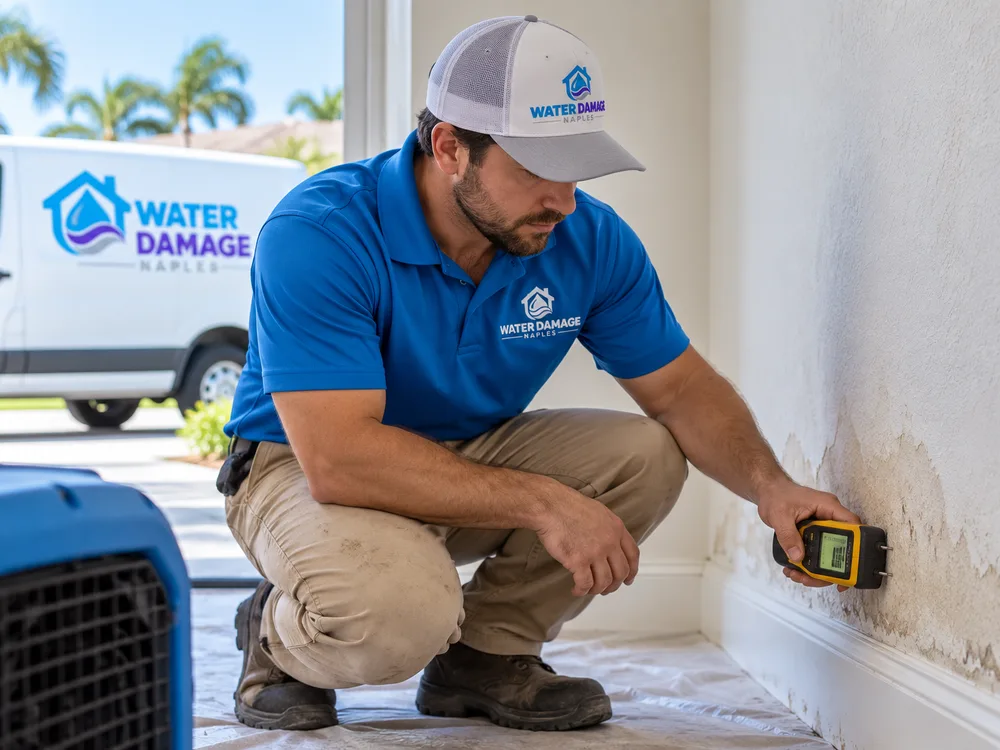
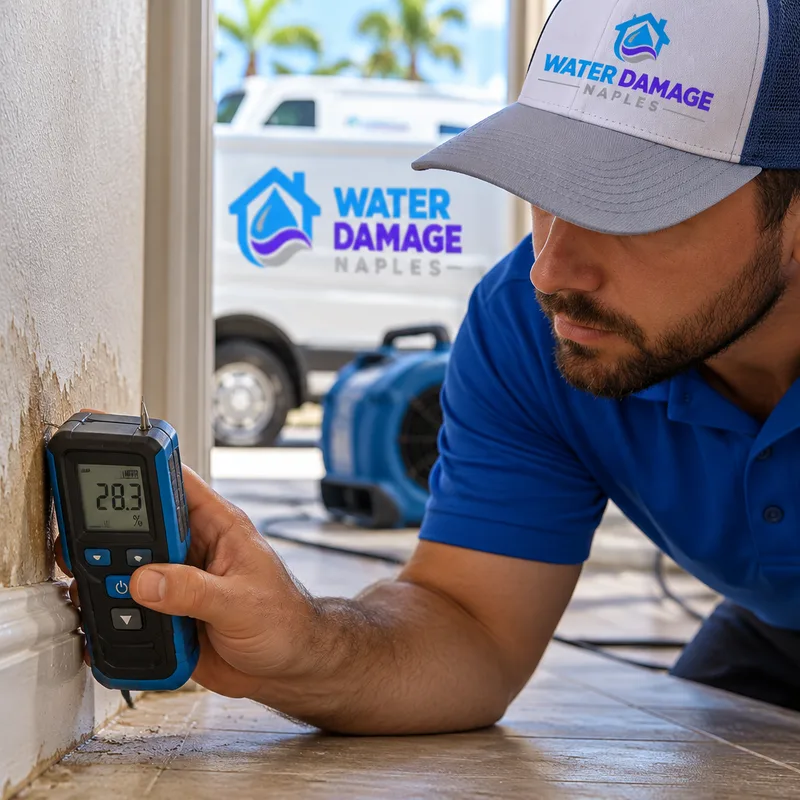
Florida's humid air can slow evaporation and make moisture control more difficult. Water may also move under baseboards, through wall cavities, beneath cabinets, or into flooring assemblies where the surface looks dry. Contractors use moisture meters and, when appropriate, thermal imaging to locate affected areas before setting the drying plan.
Water Damage Naples takes the details once and connects callers with water damage contractors in the Naples area who handle this type of work. You speak directly with the contractor, discuss the condition of the property, receive the contractor's quote, and decide whether to proceed.
Signs and immediate priorities
The contractor asks whether the water came from a supply line, appliance, roof opening, fixture overflow, groundwater, or storm intrusion. The source affects containment, cleanup, and which materials may remain.
Visible water is only part of the assessment. Readings may be taken at drywall, baseboards, cabinets, subfloors, carpet padding, and adjacent rooms to trace hidden migration.
Contractors consider the water's origin and contamination level. Clean supply water is handled differently from water containing sewage, chemicals, or outdoor contaminants.
Porous materials such as carpet pad, insulation, and drywall react differently from tile, concrete, and sealed surfaces. Saturation, contamination, and deterioration guide removal decisions.
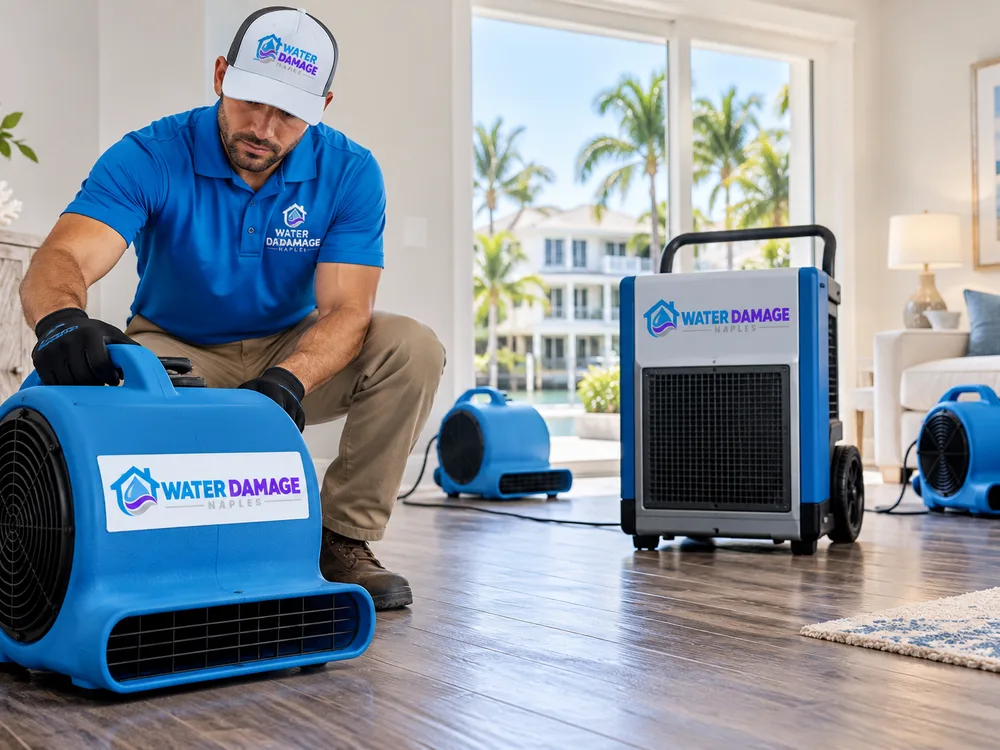
Room volume, indoor humidity, airflow, temperature, and enclosed cavities affect equipment placement. Air movers and dehumidifiers are arranged around the actual moisture pattern.
Standing water near outlets, appliances, panels, ceilings, or visibly weakened materials needs careful evaluation before normal access or equipment setup.
From the first call through moisture monitoring
Explain where the water is, what caused it if known, when it was noticed, and whether the source is still active. We pass those details to a local contractor who handles water removal.
The contractor evaluates visible water, checks nearby materials, and takes moisture readings. This establishes the boundaries of the work and identifies safety or contamination concerns.
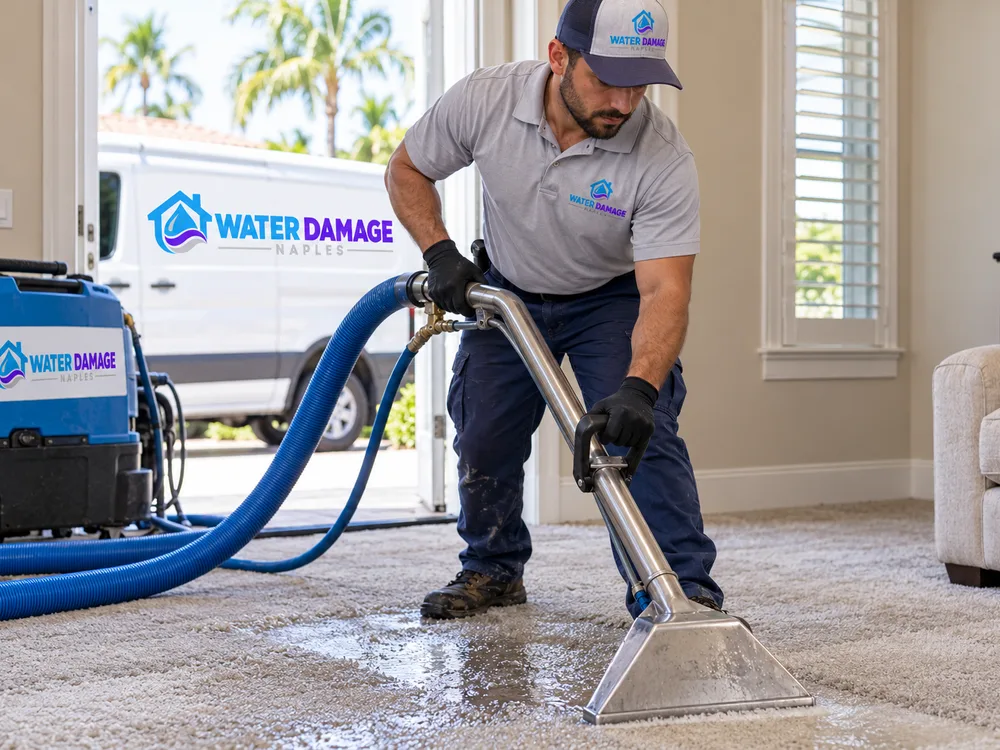
Portable or truck-mounted extraction equipment may be used depending on access, water volume, and surface type. Carpet extraction tools, hard-surface tools, and sub-surface methods suit different assemblies.
Materials that cannot be cleaned or dried adequately may need controlled removal. The contractor should explain why removal is recommended before that part of the work begins.
Air movers promote evaporation while dehumidifiers collect moisture from the air. Equipment placement may change as readings show which areas remain wet.
Drying is tracked with repeat measurements rather than appearance alone. The contractor determines when affected materials have reached an appropriate drying target and discusses any repair work that remains.
One phone call replaces a round of contractor searches: describe the affected rooms once, get connected locally, and discuss the job directly with the contractor.
CALL NOW: +1 239 241 6896Extraction and drying details
Practical answers before you call
Be ready to describe the property type, affected rooms, approximate depth or spread of visible water, suspected source, and whether water is still entering. Mention wet ceilings, electrical exposure, sewage, strong odors, or restricted access because those details help identify a contractor suited to the job.
Flooring does not always require removal, but the decision depends on its material, installation method, contamination, and moisture beneath it. Tile over concrete may present different drying issues than laminate, wood, carpet, or flooring installed over a wood subfloor. The contractor should take readings and explain the recommended approach.
Contractors commonly use moisture meters to compare affected materials with dry reference areas. Thermal imaging may help locate temperature patterns associated with moisture, but meter readings are used to verify conditions. Cabinets, wall cavities, baseboards, and flooring edges often need close attention.
Some contents can be moved within the property, protected on blocks, or relocated while extraction and drying take place. Items that are saturated or contaminated may require separate handling. The contractor can identify what must be cleared once the affected area is inspected.
Avoid entering areas with electrical hazards, sagging ceilings, sewage, or visibly unstable materials. Do not use an ordinary household vacuum to collect standing water. If the source can be stopped safely, do so, then preserve access to the affected rooms and note when the problem was discovered.
The contractor provides the quote after discussing or assessing the job. Scope depends on the water source, affected materials, contamination, extraction needs, drying equipment, access, and monitoring. You review the contractor's terms and decide whether to authorize the work.
Water removal focuses on extraction, removal of affected materials when necessary, and structural drying. Replacing drywall, trim, cabinets, or flooring is a separate repair scope. Ask the contractor to state clearly which removal, drying, cleaning, and reconstruction tasks are included.
Describe the source, affected rooms, and visible damage once. We will connect you with a local contractor who can discuss the water removal job, provide a quote, and let you decide the next step.
CALL NOW: +1 239 241 6896