Water Extraction
Pumps and extraction equipment remove accessible standing water so the affected materials can be evaluated and drying can begin.
Water Damage Restoration · Naples, Florida
Describe the water damage once and get connected with a local contractor who handles cleanup, drying, and property recovery.
✓Describe the damage once
✓Connect with a local contractor
✓Discuss cleanup and drying directly
✓You decide whether to proceed
Cleanup, drying, and recovery
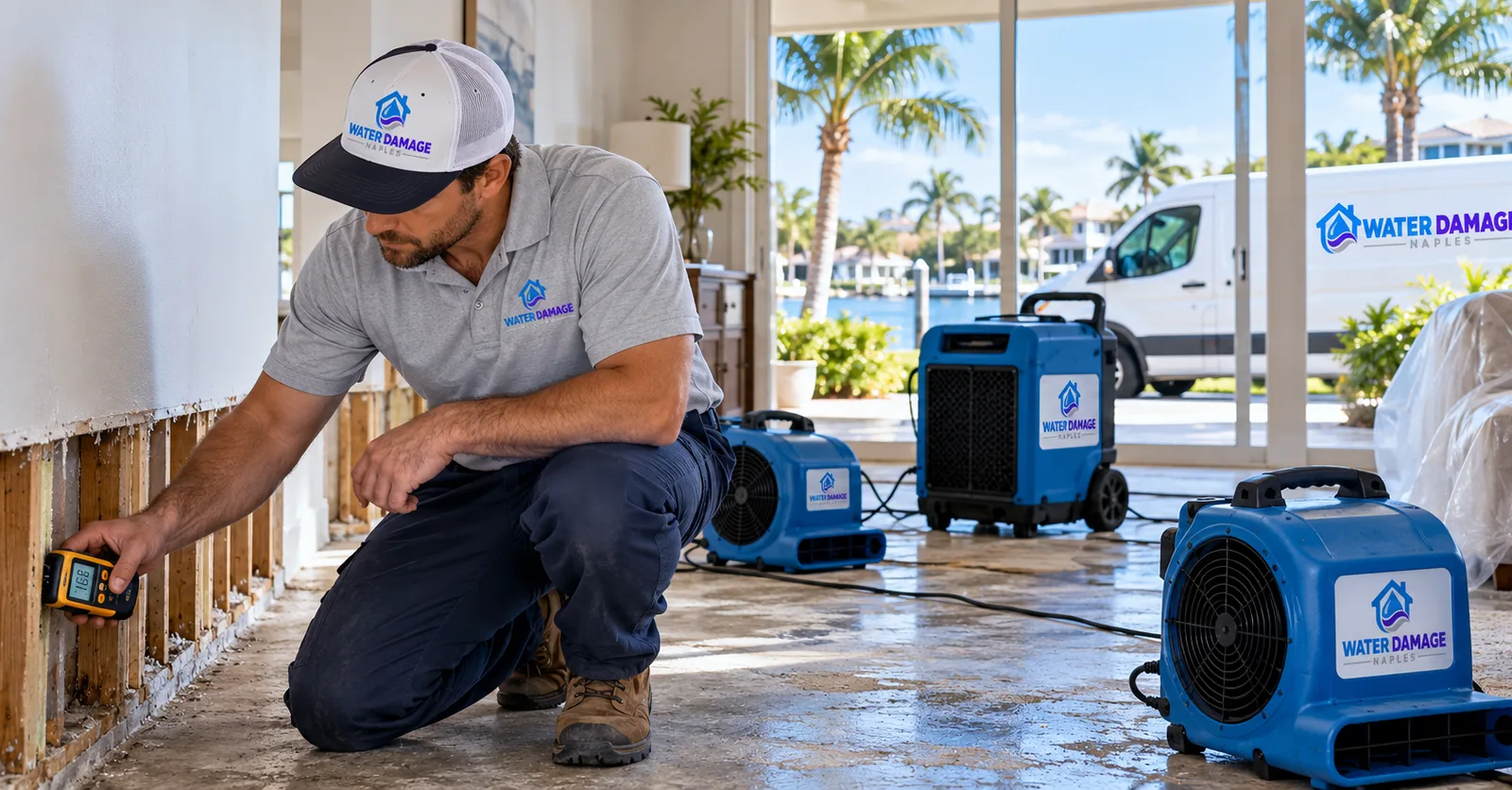
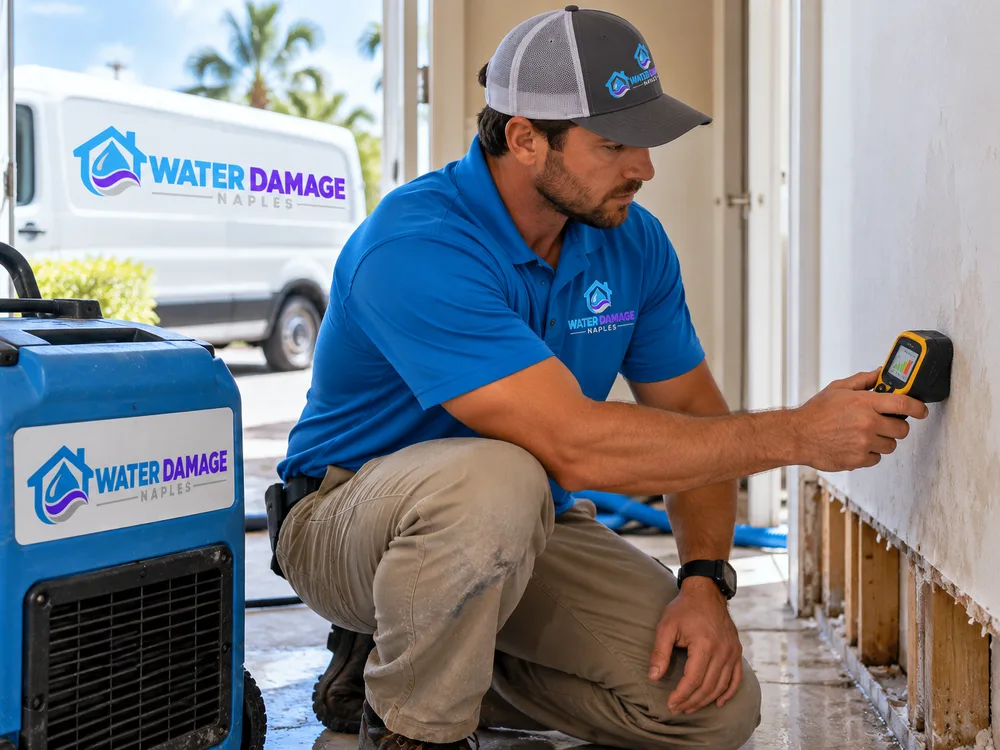
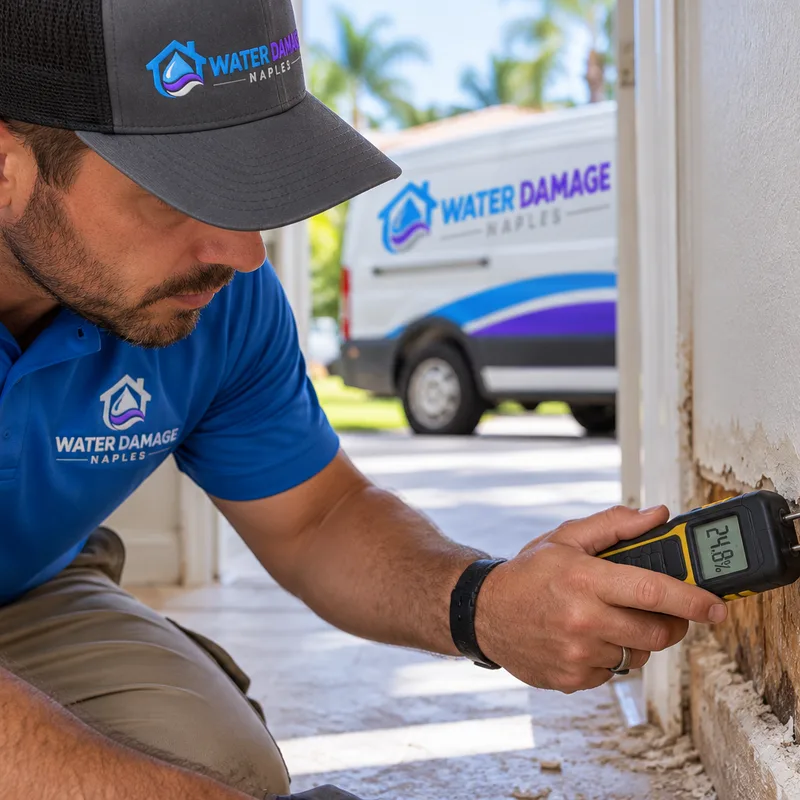
Water damage restoration in Naples, FL starts by identifying the water source, stopping further entry when possible, and checking how far moisture has traveled. Water can move behind baseboards, under flooring, into wall cavities, and through ceiling assemblies without leaving an obvious surface stain. A contractor may use a moisture meter, thermal imaging camera, or controlled inspection openings to map affected materials.
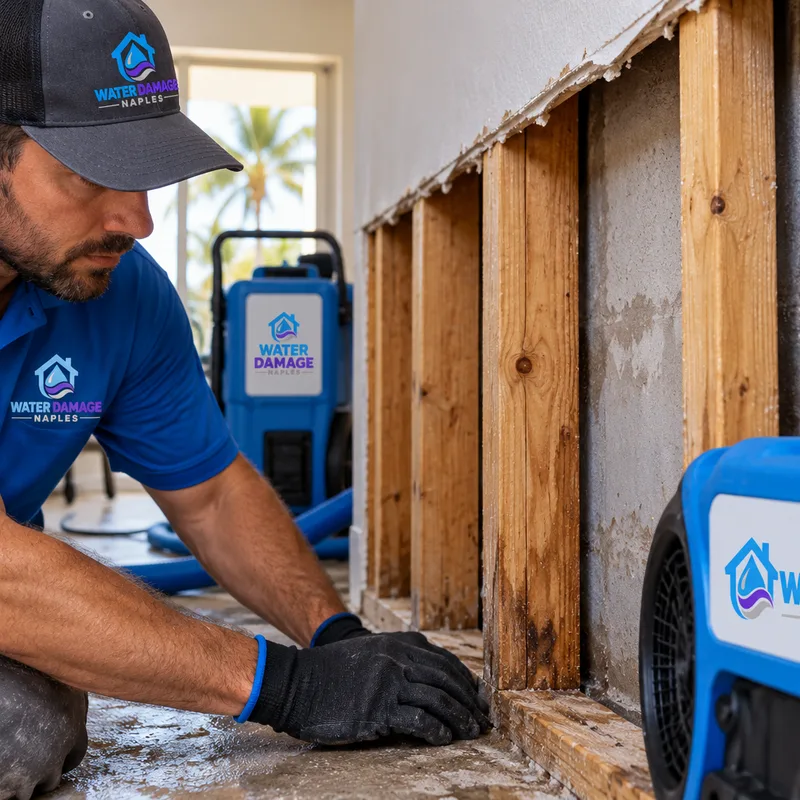
The work may include standing-water extraction, removal of damaged porous materials, cleaning, air movement, dehumidification, and moisture monitoring. The contractor records readings during drying and determines which materials can remain. Drywall, insulation, carpet pad, and engineered wood may require removal when they are saturated, contaminated, swollen, or unable to dry in place. Tile, framing, and other durable materials may be retained when they can be cleaned and dried adequately.
Water Damage Naples takes the details once and connects callers with water damage companies across Naples that serve the affected area. The contractor discusses the scope directly with the homeowner, provides the quote, and performs the work if the homeowner decides to proceed.
Naples properties face several relevant sources of water intrusion. Wind-driven rain can enter through damaged roof or wall openings during tropical weather. Air-conditioning drain problems are also common concerns in a warm, humid climate, while failed supply lines, appliance hoses, water heaters, toilets, and plumbing fixtures can release water indoors. In low-lying coastal areas, storm surge or outdoor flooding changes the cleanup approach because the water may contain soil, debris, and other contaminants.
Signs and immediate priorities
Pumps and extraction equipment remove accessible standing water so the affected materials can be evaluated and drying can begin.
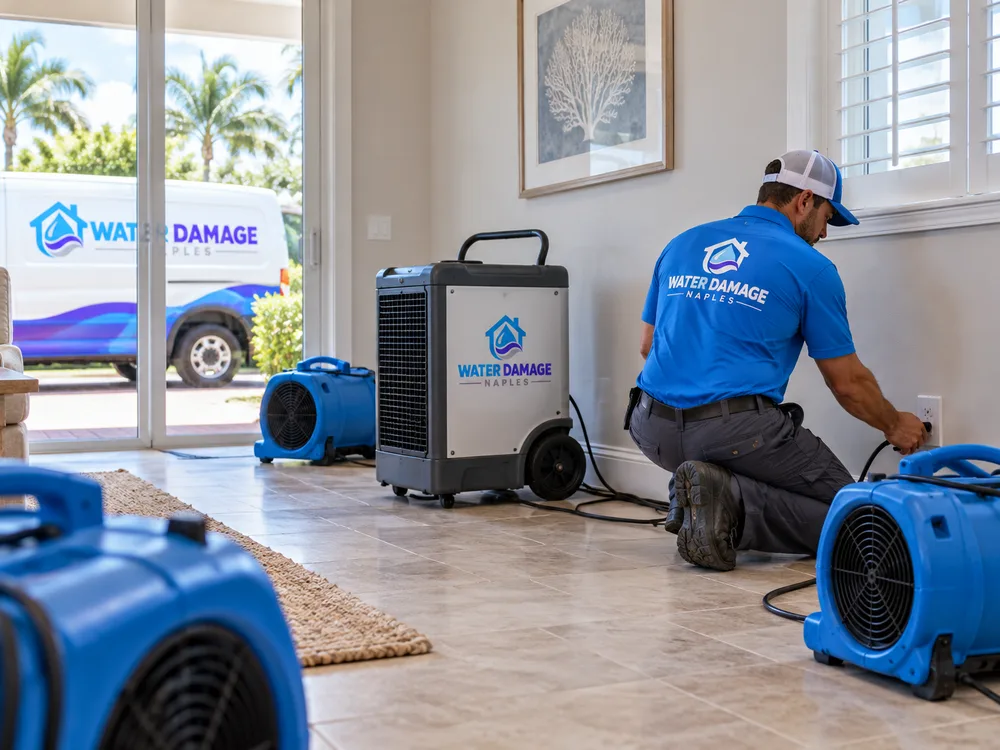
Air movers and dehumidifiers manage evaporation and airborne moisture. Contractors monitor material readings rather than relying only on whether a surface feels dry.
Wet drywall, insulation, carpet pad, cabinetry components, or flooring may be removed when contamination or material damage makes drying in place unsuitable.
Affected surfaces may need debris removal and cleaning based on the water source. Sewage and outdoor floodwater require stricter containment and handling than a clean supply-line release.
Initial and follow-up readings help the contractor track drying conditions and identify pockets of moisture that still need attention.
Describe where the water started, which rooms are affected, and what has changed. We pass those details to a local contractor, and the homeowner stays in control of the decision.
From the first call through recovery planning
Explain whether the source is active, when the water was noticed, which rooms are involved, and whether ceilings, walls, floors, or cabinets feel wet. Mention sewage, outdoor flooding, odors, sagging ceilings, or electrical concerns immediately.
We connect you with an independent contractor who serves Naples and the surrounding area. The contractor can ask about access, building type, shutoff status, visible damage, and any steps already taken.
The contractor identifies the water category, checks the extent of migration, and evaluates affected assemblies. Hidden moisture may require checking wall cavities, flooring layers, cabinets, and rooms beside or beneath the visible damage.
Standing water is extracted first. Materials that cannot be retained are removed as needed, and affected surfaces are cleaned according to the source and contamination level.
Drying equipment is positioned to move moisture out of materials and collect it from the air. Equipment placement may be adjusted as readings change, and drying continues until the contractor reaches an appropriate endpoint for the materials involved.
After drying, the contractor explains remaining repair needs. Restoration cleanup and reconstruction are different phases, so ask whether the quoted scope includes only mitigation or also covers replacement of removed finishes.
One phone call lets you describe the water source, affected rooms, and visible damage once, then speak directly with a local contractor who handles water restoration in Naples.
CALL NOW: +1 239 241 6896Work and material details
Practical answers before you call
Shut off the source only when you can reach the correct valve safely. Do not enter standing water near electrical equipment, and do not stand beneath a sagging ceiling. If the release involves a plumbing supply line or appliance connection, tell the contractor whether the building shutoff or fixture valve has already been closed.
The decision depends on the material, water source, contamination, saturation, and ability to reach the wet area. Nonporous materials are generally easier to clean, while porous drywall, insulation, carpet pad, and composite wood can hold water or lose integrity. The contractor should explain the reason for each proposed removal.
Yes. Water entering from the ground, storm surge, or a sanitary backup may contain contaminants and calls for different containment, removal, and cleaning practices. A clean-water release can also become more complicated after prolonged contact with building materials, so describe the source and timing as accurately as possible.
Humid outdoor air can slow evaporation and add moisture when doors or windows are left open. Contractors typically coordinate air movement and dehumidification within a controlled area, then monitor both air conditions and material moisture to judge drying progress.
Be ready to describe the water source, whether it is still active, when it was discovered, the rooms and levels affected, and any visible ceiling, wall, flooring, or cabinet damage. Also mention odors, sewage, outdoor floodwater, power concerns, gated access, occupied units, and whether the property is a single-family home or condominium.
The local contractor provides the scope and quote directly after gathering enough information about the damage. Ask which materials are included, whether moisture monitoring and equipment removal are covered, and whether the scope ends after drying or includes reconstruction. You decide whether to proceed.
Yes. Paint, tile, and flooring surfaces may feel dry while moisture remains in drywall cores, insulation, subflooring, cabinet bases, or wall cavities. Moisture readings and inspection of adjoining spaces help define whether drying is complete.
Many restoration contractors handle condominium water damage, but access and responsibility can involve the unit owner, building management, and the association. Tell the contractor whether the source may involve a shared wall, common plumbing, an upper unit, or a mechanical room, and contact building management about access requirements.
Describe what happened once and get connected with a local contractor who can assess the affected materials, explain the cleanup and drying scope, and provide the quote directly.
CALL NOW: +1 239 241 6896