
Moisture Source
Removal alone does not solve recurring growth. The contractor looks for plumbing leaks, roof or window intrusion, condensation, drainage problems, and indoor humidity conditions that may keep materials damp.
Mold Remediation · Naples, Florida
Describe the mold problem once and get connected with a local contractor who handles containment, removal, cleaning, and restoration planning.
✓Describe the mold problem once
✓Connect with a local contractor
✓Discuss containment and cleanup directly
✓You decide whether to proceed
Containment, removal, and restoration planning
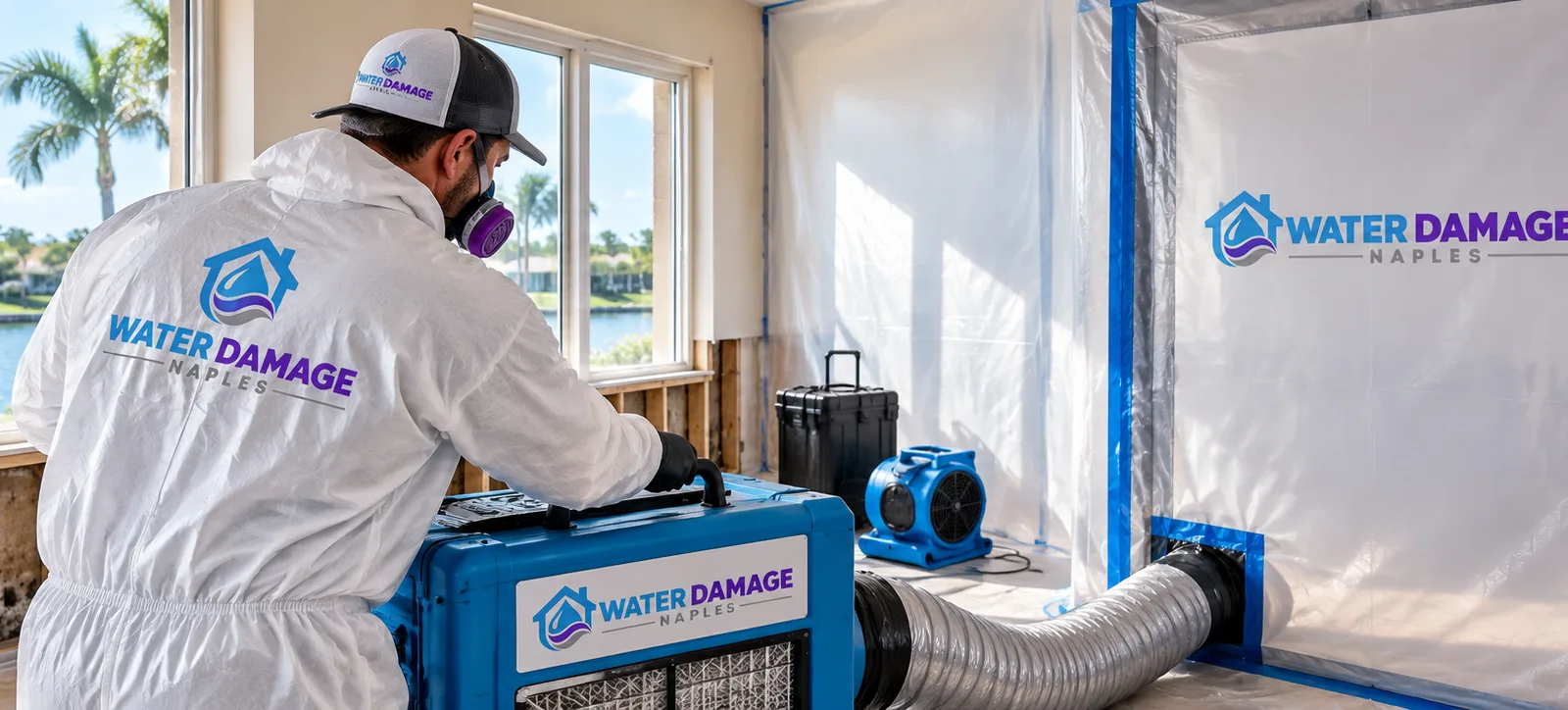
Naples mold remediation starts by identifying affected materials, the moisture source, and the boundaries of the work area. A contractor may use moisture meters, thermal imaging, visual inspection, and information about past leaks or indoor humidity to plan the job. Remediation can include containment, air filtration, removal of porous materials that cannot be cleaned, surface treatment, HEPA vacuuming, and preparation for repairs.
Naples presents conditions that deserve careful attention. Warm, humid air can enter through open doors, poorly sealed penetrations, or ventilation problems. Wind-driven rain and tropical weather can expose roof, window, and exterior-wall defects. Air-conditioning systems also matter because condensation around air handlers, ducts, drain pans, and refrigerant lines can keep nearby materials damp. Properties near the coast may face persistent humidity, while homes used seasonally can develop hidden moisture when indoor conditions are not monitored.
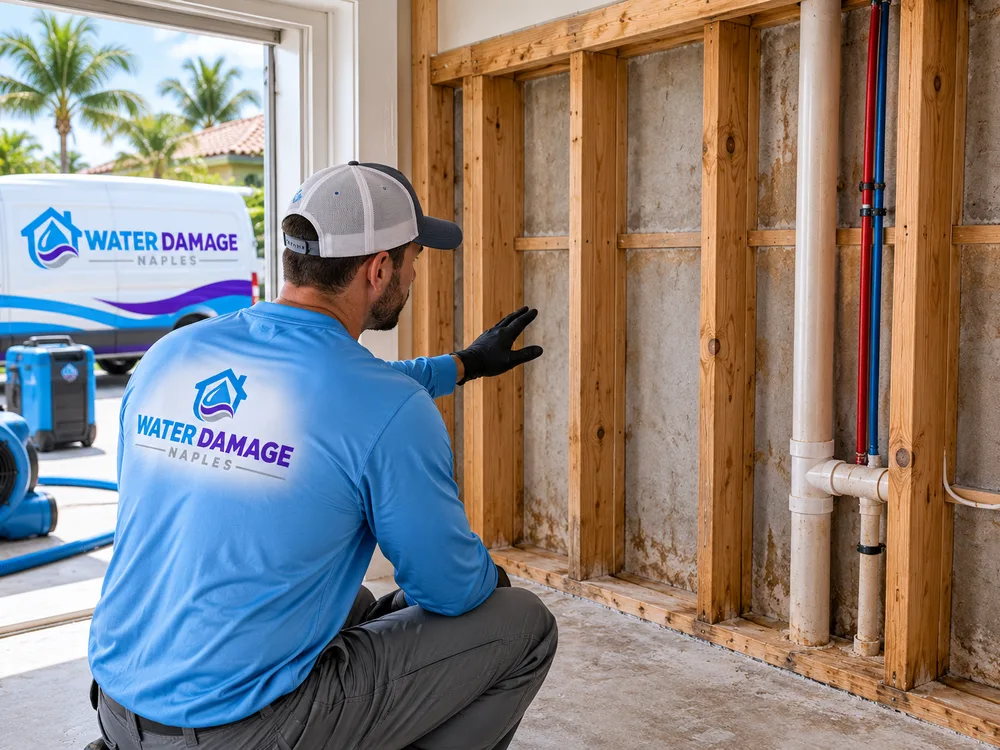
Mold may be visible, but the affected area can extend behind baseboards, cabinets, drywall, or flooring. A musty odor, staining, swelling, peeling finishes, or recurring condensation can help a contractor decide where to investigate. If standing water, an active plumbing leak, or wet building materials are still present, that source must be addressed as part of the overall plan. When related moisture work is needed, we can pass the details to water damage contractors serving Naples and connect the caller with a contractor suited to the reported conditions.
Water Damage Naples is a referral service. You explain what you are seeing once, and we connect you with an independent local contractor who serves Naples and the surrounding area. You speak directly with that contractor about the inspection findings, proposed scope, quote, and scheduling. You decide whether to proceed.
Signs and immediate priorities
Removal alone does not solve recurring growth. The contractor looks for plumbing leaks, roof or window intrusion, condensation, drainage problems, and indoor humidity conditions that may keep materials damp.
Visible growth is only one part of the assessment. The contractor considers odors, material condition, moisture readings, adjacent rooms, wall cavities, cabinets, flooring, and HVAC components where relevant.
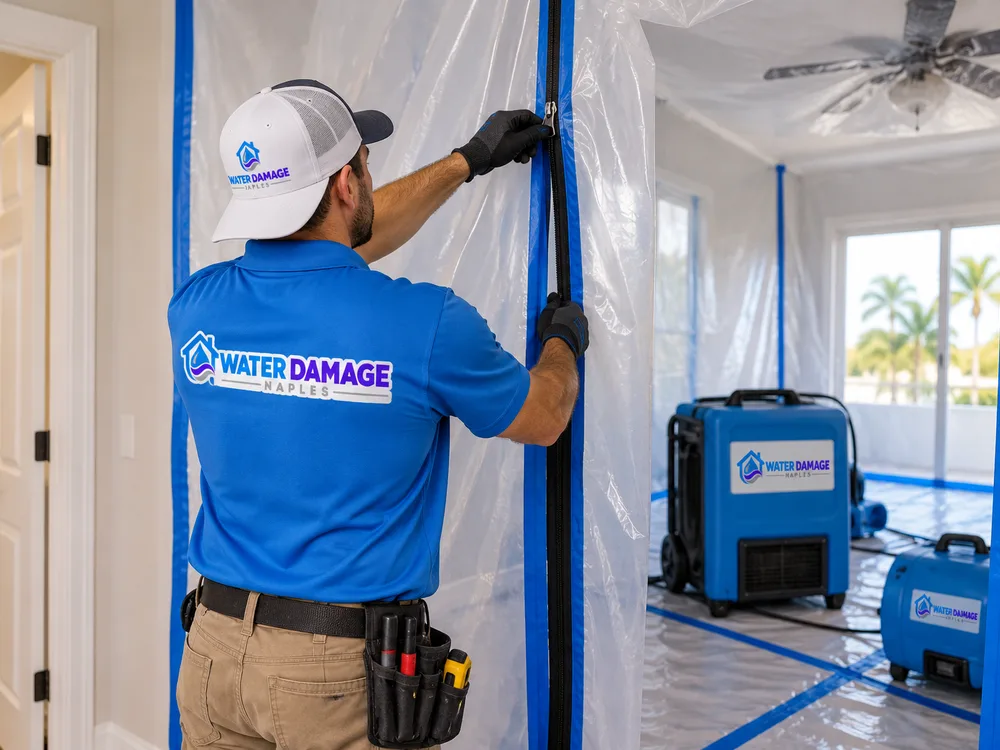
Polyethylene barriers and sealed openings can separate the work zone from occupied areas. Larger or more complex jobs may use negative air pressure and HEPA-filtered air scrubbers to control particles during removal.
Nonporous materials may be cleaned when their condition allows. Porous materials such as drywall, insulation, carpet pad, or some pressed-wood products may need removal when contamination cannot be adequately addressed.
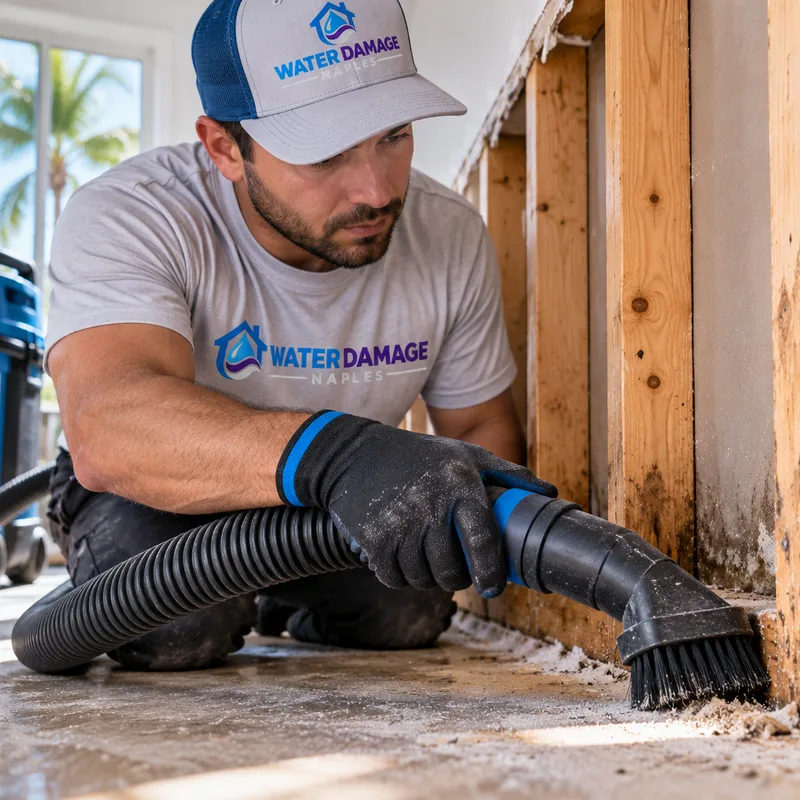
After removal, the work area is commonly HEPA-vacuumed and damp-wiped. The contractor should explain visual completion criteria and whether an independent assessor or clearance testing is appropriate.
Remediation and rebuilding are separate parts of many projects. Ask who will replace drywall, insulation, trim, flooring, or cabinetry after the affected area is dry and ready for reconstruction.
From assessment through rebuilding review
When you call, mention where the problem appears, when you first noticed it, whether there is an odor, and any known leak, storm entry, condensation, or air-conditioning issue. Photos and a basic history can help the contractor prepare for the first conversation.
The contractor evaluates visible conditions, moisture patterns, affected materials, access constraints, and the likely source. Testing is not automatically required for every visible mold problem, but it may be useful when the source is unclear, contamination is disputed, or post-remediation documentation is requested.
Active leaks and persistent condensation must be corrected or coordinated before the repaired area is closed. Drying goals depend on the material, assembly, and indoor conditions rather than appearance alone.
The contractor establishes containment suited to the job. Supply and return vents in the work zone may be isolated, and negative-air equipment may be used so disturbed particles are directed through HEPA filtration.
Affected porous materials are removed when they cannot be adequately cleaned. Remaining surfaces are treated according to their material and condition, followed by detailed HEPA vacuuming and wiping within the contained zone.
The area should be dry, visibly clean, and ready for the agreed completion review before finishes are replaced. The contractor explains what was removed, what remains, and any repair work needed to restore the space.
One call lets you describe the affected room, moisture history, and visible conditions once, then speak directly with a Naples-area contractor who handles mold remediation.
CALL NOW: +1 239 241 6896Work and material details
Practical answers before you call
Testing is not required for every visible mold condition. A contractor can often develop a scope when growth and the moisture source are apparent, while sampling may be appropriate when contamination is hidden, occupants need documentation, or an independent assessment is requested. Ask who will interpret the results and how they would change the work plan.
That depends on the affected area, containment plan, access route, HVAC layout, and conditions in occupied rooms. A contractor should explain which rooms will be isolated, whether air-conditioning zones are affected, and what restrictions apply during removal and cleaning. Businesses should also discuss customer access and operating areas before work begins.
Replacement may be a separate reconstruction scope. Mold remediation focuses on containment, removal of materials that cannot be retained, cleaning, and preparation of the area for restoration. Ask the contractor to identify exactly which repairs are included and who will handle finishes after remediation.
Be ready to describe the affected room, visible growth or staining, odors, known leaks, recent storm entry, condensation, and how long the condition has been noticed. Mention whether the property is occupied, seasonal, commercial, or undergoing renovation, and whether previous cleanup has already been attempted.
The contractor first determines whether growth is limited to surfaces near a vent or involves ducts, insulation, an air handler, a drain pan, or a condensate problem. HVAC equipment should not be operated in a way that spreads particles from the work zone. The remediation and mechanical scopes may need coordination before normal operation resumes.
The independent contractor provides the quote after discussing or inspecting the conditions. You can ask how containment, removal, cleaning, disposal, verification, and reconstruction are addressed, then decide whether the proposed scope fits the property and the problem.
Describe what you can see, smell, or trace to a moisture source, and get connected with a local contractor who can assess the remediation work and discuss the next steps directly with you.
CALL NOW: +1 239 241 6896