Water Extraction
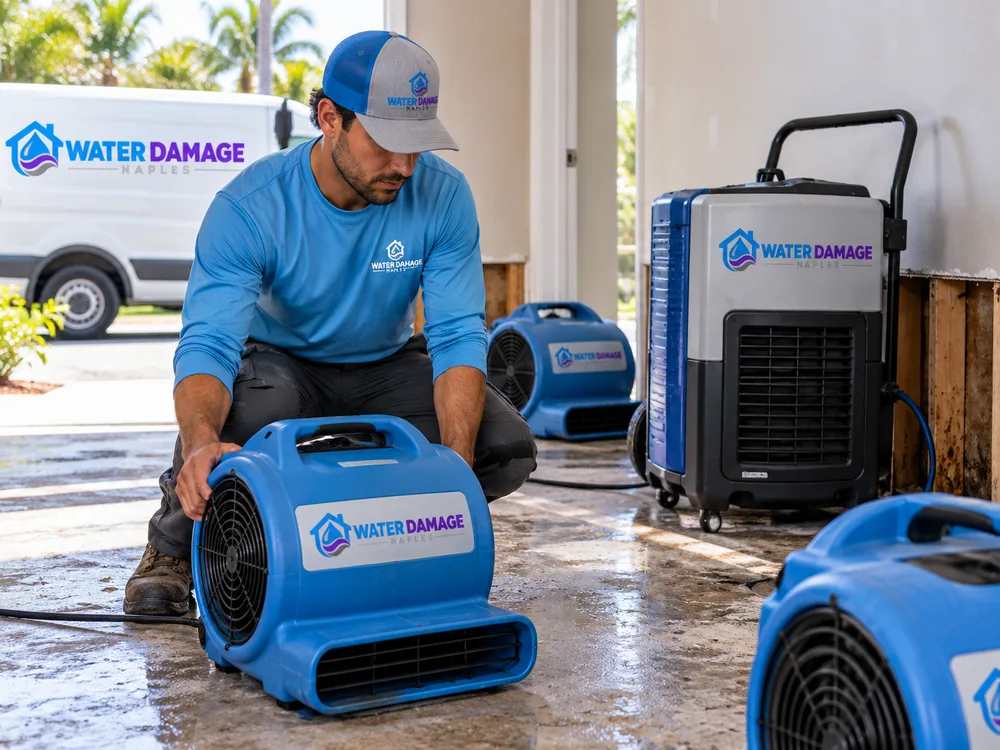
Standing water is removed so the contractor can expose wet surfaces, assess damage, and begin controlled drying.
Water Damage Repair · Naples, Florida
Describe the damage once and get connected with a local contractor who handles water cleanup, structural drying, and repairs.
✓Describe the damage once
✓Connect with a local contractor
✓Discuss drying and repairs directly
✓You decide whether to proceed
Source control, drying, and repair
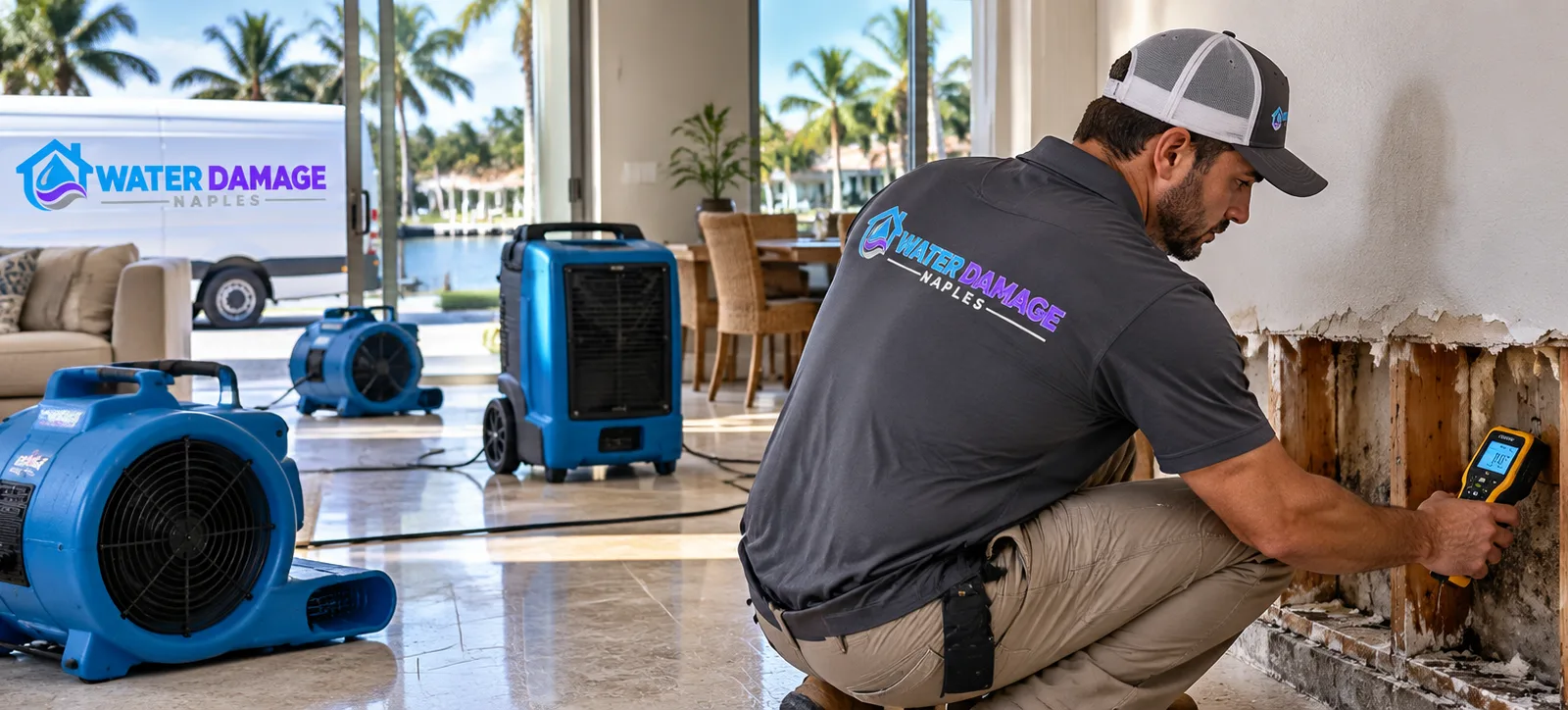
Naples FL water damage repair starts by stopping or isolating the source when that can be done safely. A contractor then traces how far the water traveled through flooring, drywall, insulation, cabinets, and wall cavities. Water often spreads beyond the visible stain, so a dry-looking surface does not confirm that the material behind it is dry.
Common causes include failed supply lines, appliance leaks, roof intrusion, air-conditioning condensate problems, plumbing backups, and storm-driven water. Naples homes also face heavy rain and humid outdoor air, which can slow natural evaporation. In coastal communities such as Park Shore and Old Naples, wind-driven rain can enter around roofs, windows, doors, and exterior wall openings. Low-lying properties may also require a broader check after intense rainfall.
The contractor may use a moisture meter, thermal imaging as a screening tool, and targeted openings to define the affected area. Standing water is extracted first. Unsalvageable porous materials may be removed, while materials that can remain are dried with air movers and dehumidifiers. Repairs begin after moisture readings show that the affected assemblies have reached an acceptable drying goal.
Water Damage Naples takes the job details once and connects callers with local water damage companies serving the Naples area that handle this type of work. You speak directly with the contractor, discuss the proposed scope, receive the quote from that contractor, and decide whether to proceed.
Signs, priorities, and repair details
Standing water is removed so the contractor can expose wet surfaces, assess damage, and begin controlled drying.
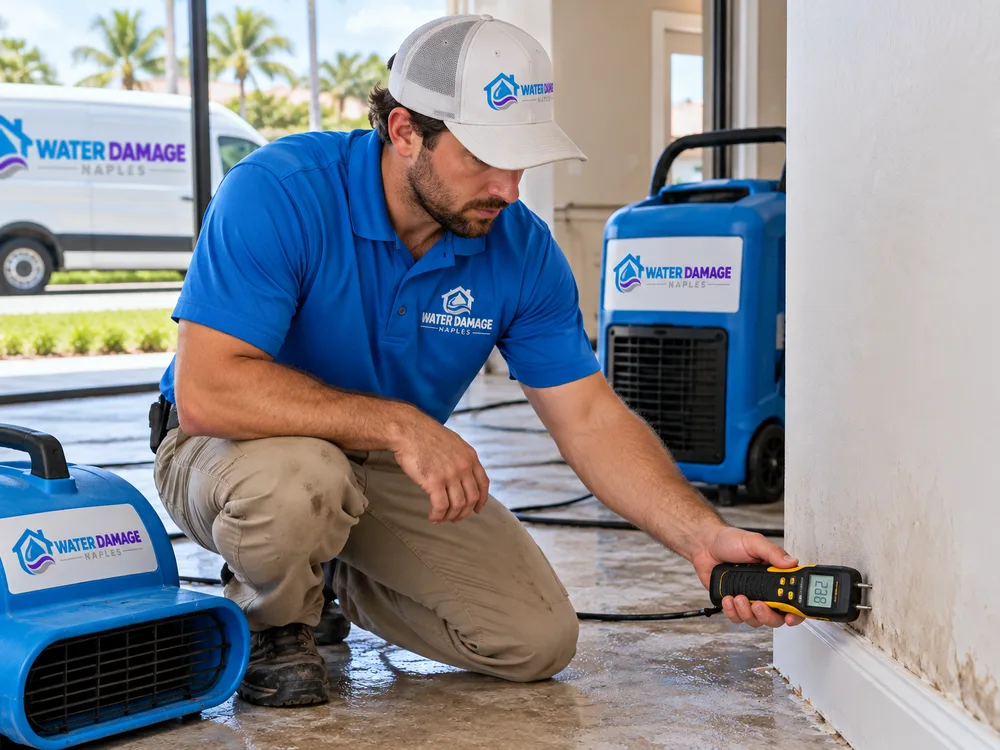
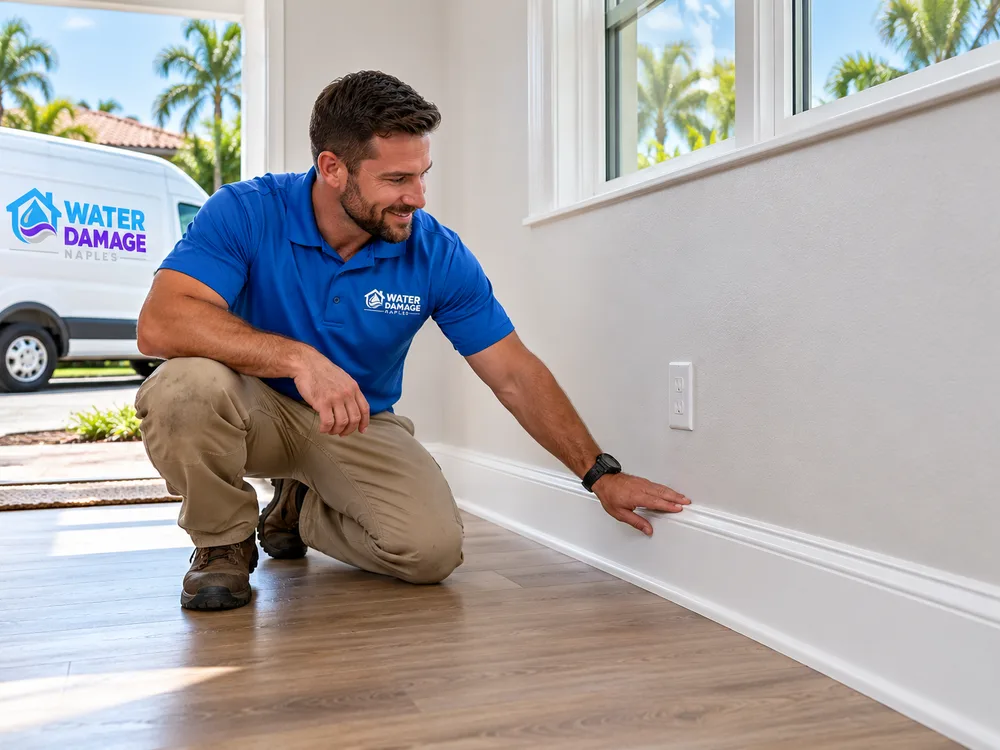
Readings are taken across walls, floors, cabinets, and nearby rooms to distinguish visible damage from the full wet area.
Saturated drywall, insulation, trim, carpet pad, or damaged cabinetry may need removal when drying them in place is not practical.
Air movers promote evaporation, while dehumidifiers collect moisture from the air. Equipment placement changes as readings improve.
After drying, the scope may include surface cleaning, drywall replacement, trim work, flooring repairs, painting, and cabinet repairs.
Describe the incident once, get connected with a contractor serving Naples and the surrounding area, and make the hiring decision after speaking directly.
From the first call through rebuilding
On the call, explain the likely source, when you noticed it, which rooms are affected, whether water is still present, and whether electricity or ceilings appear unsafe.
We pass the details to a local contractor who handles water damage repair. There is no contact form or email queue between the initial call and the connection.
The contractor confirms whether the water source has stopped, identifies the type of water involved, and maps moisture beyond the obvious damage. Clean supply-line water is handled differently from sewage or outdoor floodwater because contamination changes removal and cleaning decisions.
The contractor explains what may be dried in place, what should be removed, where access openings are needed, and which repairs follow drying. The contractor provides the quote and answers questions about the work.
Extraction and removal come before drying equipment is set. Moisture readings are checked during the work, and reconstruction starts after the affected materials are ready for repair.
One phone call lets you describe the leak, flooding, or moisture intrusion once and speak with a local contractor who can assess the work.
CALL NOW: +1 239 241 6896Work and material details
Practical answers before work begins
The decision depends on the material, contamination category, condition, and moisture readings. Nonporous surfaces and some structural materials may be cleaned and dried, while saturated insulation, carpet pad, swollen particleboard, and deteriorated drywall often require removal. The contractor should explain each removal recommendation before repair work starts.
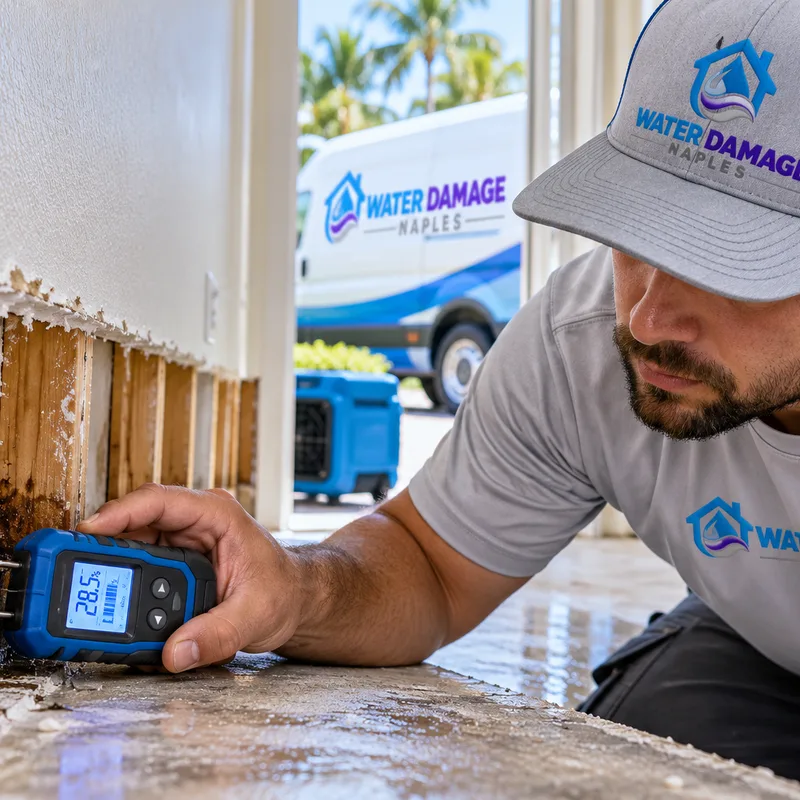
Water can travel under flooring, along wall plates, through insulation, and into adjacent rooms. In Naples humidity, concealed moisture may dry slowly without controlled airflow and dehumidification. Moisture mapping helps establish the actual boundary of the job.
Finish repairs should generally wait until the affected assembly reaches the drying goal set for the materials and conditions. Removing visible water does not remove moisture held inside wood, drywall, or concrete. The contractor can document readings and explain when reconstruction can begin.
Be ready to describe the water source, affected rooms, visible standing water, damaged ceilings or flooring, and when the problem was discovered. Mention sewage, stormwater, electrical concerns, odors, or a sagging ceiling immediately because those details affect how the contractor approaches the property.
Yes. Water entering from outdoors may carry soil, debris, microorganisms, or other contaminants, so porous materials may require more removal than they would after a clean supply-line leak. The contractor should classify the water source and explain the cleaning and disposal plan.
You do. Water Damage Naples connects you with a local contractor, but the contractor explains the scope and provides the quote directly. You can ask about drying methods, material removal, repair sequencing, and any warranty terms before deciding.
Describe the source and affected areas once, then get connected with a local contractor who handles water extraction, drying, and repair in the Naples area.
CALL NOW: +1 239 241 6896