
Moisture-Source Review
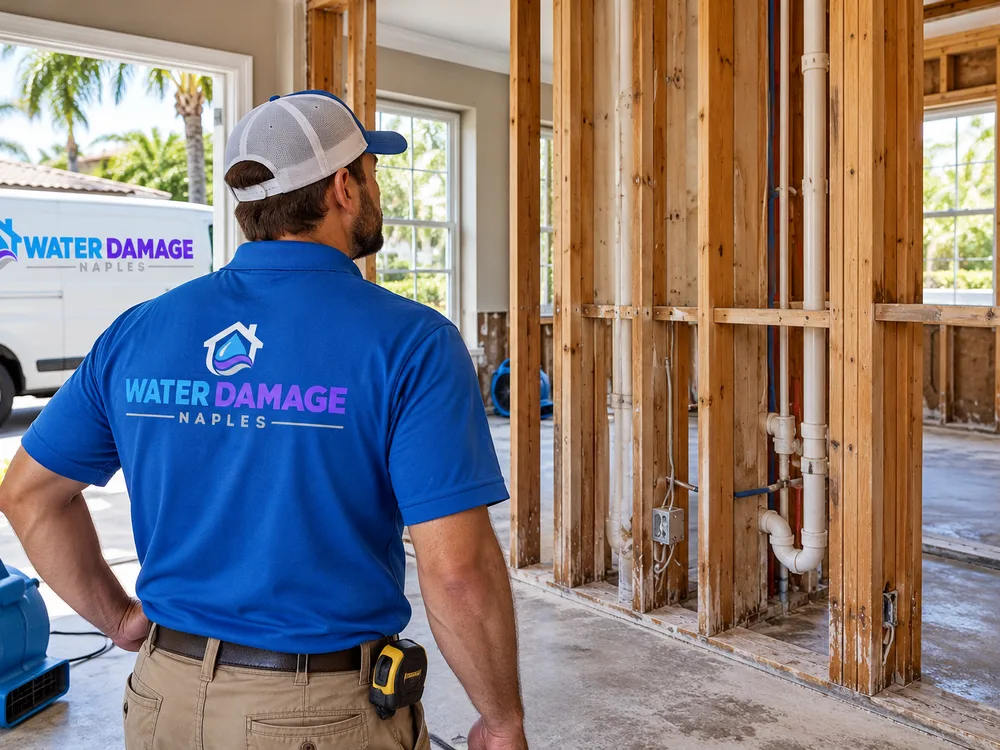
The contractor checks for active leaks, condensation, damp building materials, and indoor humidity conditions before setting the work scope.
Mold Removal · Naples, Florida
Describe the mold or moisture problem once and get connected with a local contractor who handles this work.
✓Describe the concern once
✓Connect with a local contractor
✓Discuss the removal scope directly
✓You decide whether to proceed
Assessment, containment, and removal
Mold removal in Naples should begin by finding where growth is present, which materials are affected, and why moisture reached them. Florida's humid climate, air-conditioning use, wind-driven rain, plumbing leaks, roof leaks, and condensation can all create conditions that support indoor mold growth. Growth may appear on drywall, wood framing, cabinetry, carpet backing, or insulation, but staining and odor can also point to concealed moisture inside a wall or ceiling.
A contractor typically reviews visible growth, musty odors, water history, material condition, and moisture readings before recommending a scope. The goal is to separate affected areas from occupied space, remove materials that cannot be cleaned, clean suitable surfaces, and correct the moisture condition that allowed the problem to develop. Painting over growth or wiping the visible surface does not address contamination inside porous materials.
Water Damage Naples takes the details of the job and connects callers with a contractor who works in the area. When mold follows a leak or indoor water event, we can pass the job details to local water damage companies around Naples that handle related moisture conditions and mold work. You speak directly with the contractor, discuss the proposed scope, receive the quote from that contractor, and decide whether to proceed.
Signs and immediate priorities
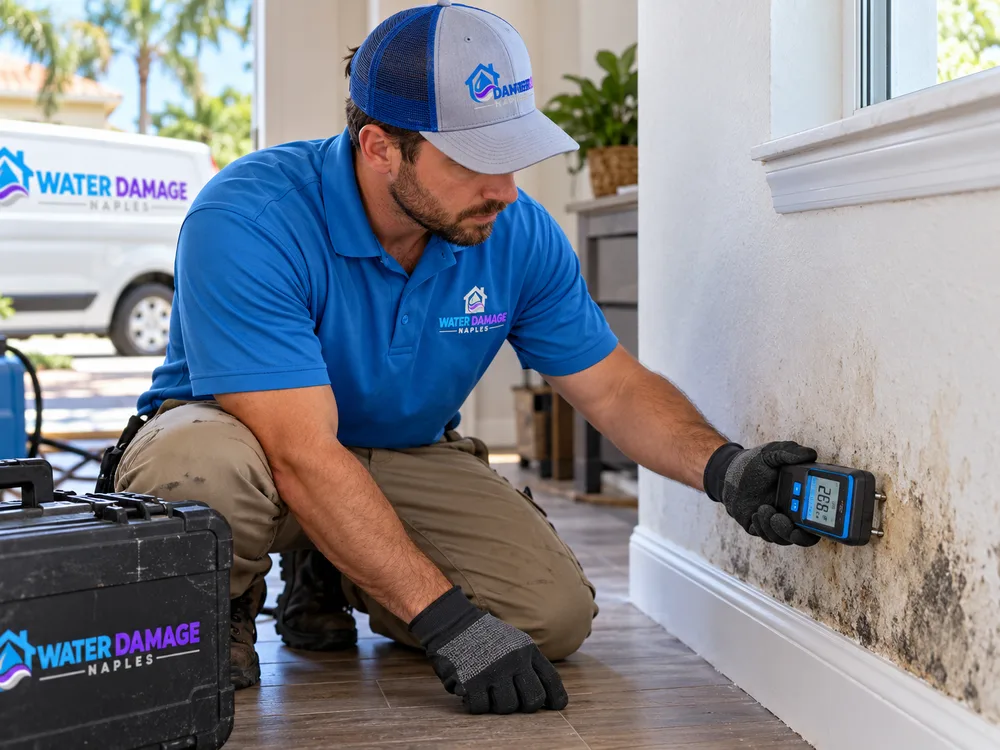
The contractor checks for active leaks, condensation, damp building materials, and indoor humidity conditions before setting the work scope.
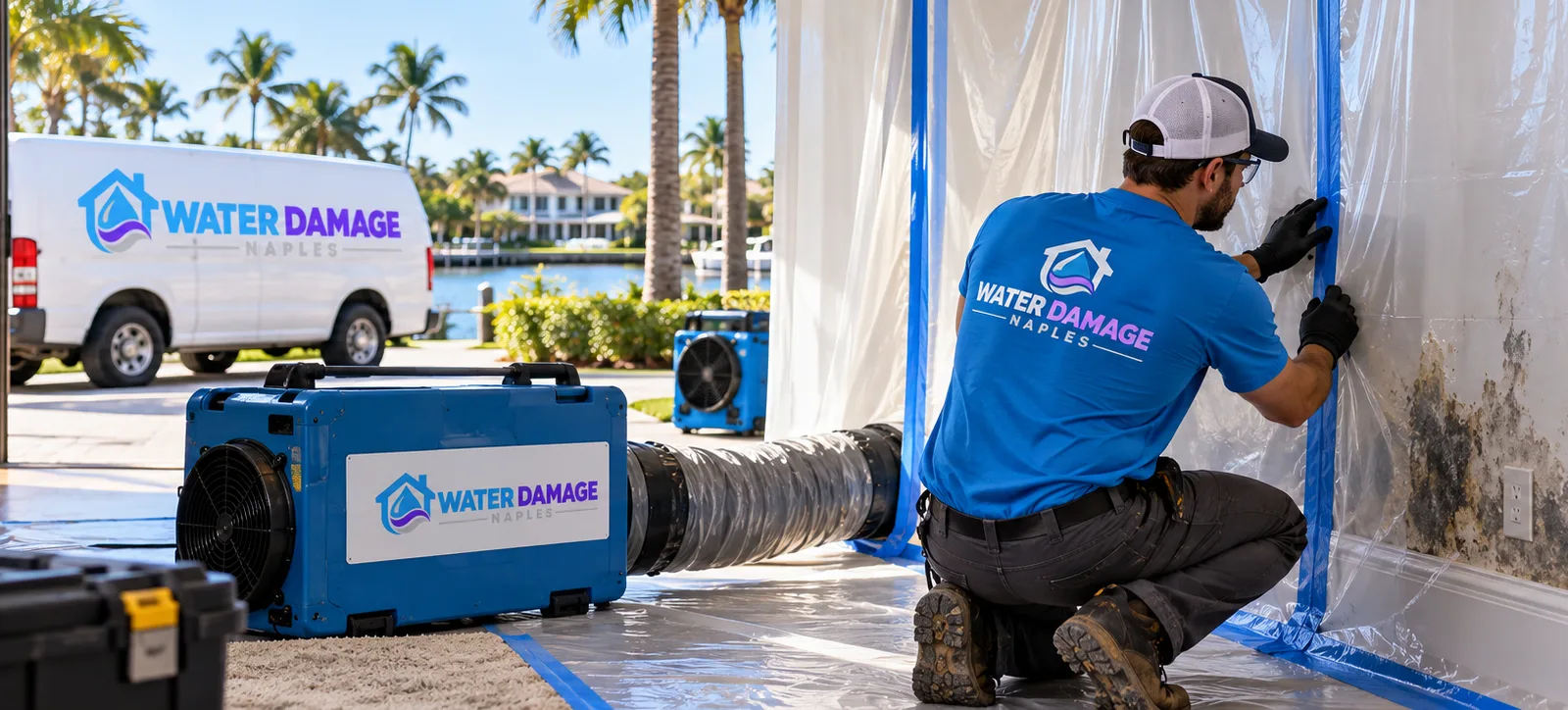
Plastic sheeting, sealed openings, and negative air pressure may be used to limit the movement of airborne particles outside the work area.
Mold-affected drywall, insulation, carpet padding, and other porous materials may need removal when they cannot be cleaned adequately.
Suitable framing and other salvageable surfaces may be cleaned with methods chosen for the material and extent of growth.
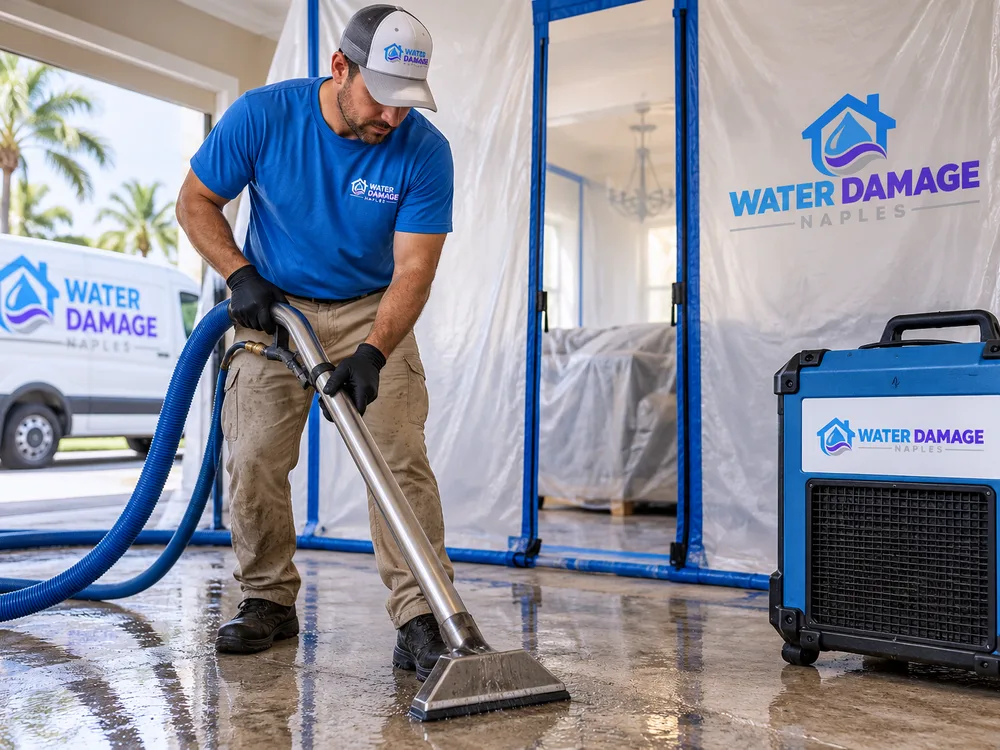
Air scrubbers with HEPA filtration and drying equipment may be used when the work plan calls for particle control and moisture reduction.
Removed finishes should not be replaced until the moisture source is addressed and the exposed materials are sufficiently dry.
From concern to removal planning
Share where the odor, staining, visible growth, or prior water intrusion appears. Mention recent leaks, roof damage, plumbing problems, vacant periods, or air-conditioning concerns.
We take the basic details and connect you with an independent contractor serving Naples and surrounding communities. There is no email chain or contact form between you and the contractor.
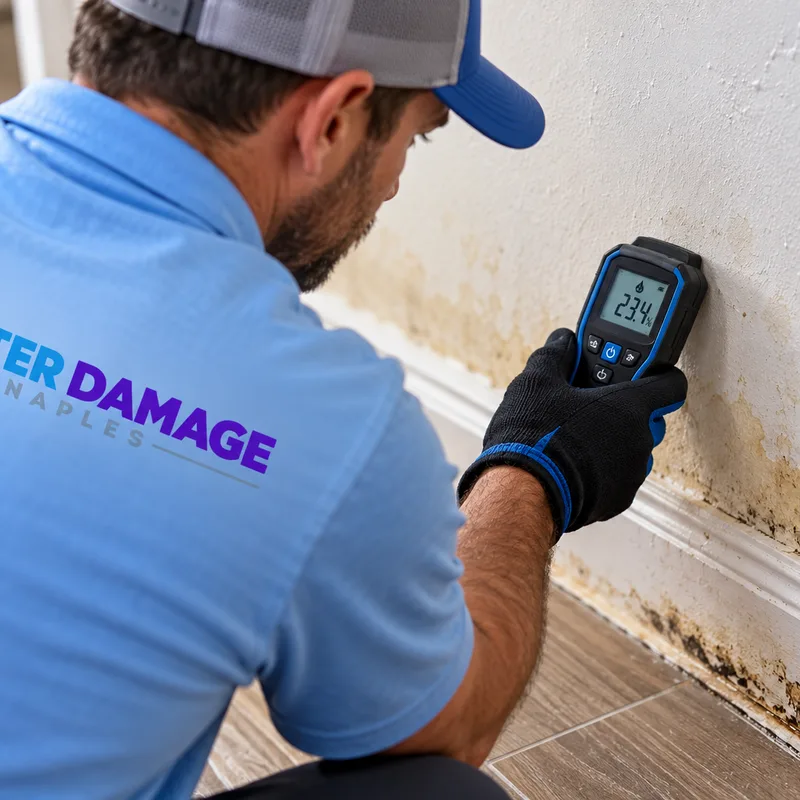
The contractor determines whether the concern is limited to a surface or may extend into drywall cavities, cabinets, flooring, insulation, or framing. Moisture mapping can help establish boundaries.
The contractor explains containment, removal, cleaning, drying, and any access work that may be needed. The quote and terms come directly from the contractor, and you choose whether to move forward.
Affected materials are handled according to the agreed scope. Reconstruction, painting, or finish replacement should follow only after the source is corrected and the area is ready to close.
One phone call lets you describe the mold concern once, reach a contractor who serves the Naples area, and discuss the next step directly.
CALL NOW: +1 239 241 6896Work and material details
Practical answers before you call
No, removal depends on the material, the depth of growth, and the moisture condition behind it. Hard, nonporous surfaces may be cleanable, while affected drywall, insulation, carpet padding, and other porous materials are often removed when contamination extends into them. The contractor determines the proposed scope after examining the area.
Describe the location, approximate affected area, odors, staining, and any known source of moisture. Also mention whether the property had a plumbing leak, roof leak, storm intrusion, air-conditioning problem, or extended period without climate control. Photos and a timeline of when the signs appeared can help the contractor prepare for the conversation.
Yes, mold can develop behind drywall, beneath flooring, around cabinets, or inside other concealed spaces when materials remain damp. Musty odor, recurring discoloration, peeling paint, softened drywall, or elevated moisture readings may justify a closer assessment. Opening finished surfaces should be based on evidence rather than broad demolition.
High outdoor humidity can make indoor moisture control more difficult, especially when air conditioning is interrupted or humid air enters a cooled building. A contractor may evaluate condensation around air handlers, supply registers, exterior walls, windows, and poorly ventilated spaces. Humidity alone does not define the removal scope, but it can contribute to damp materials and recurring growth.
That depends on the location and extent of the affected area, the containment plan, and the needs of the occupants. A small isolated work zone differs from work involving several occupied rooms or an air-handling system. The contractor should explain access restrictions and whether temporary relocation should be considered before work begins.
Testing is not automatically required for every visible mold condition. It may be considered when the source is unclear, the growth is concealed, documentation is needed, or someone wants post-work verification. Ask the contractor whether sampling would change the proposed scope and who would collect and interpret the samples.
The remaining area is cleaned, evaluated for moisture, and prepared for any needed repairs according to the contractor's work plan. Drywall and other finishes should not cover damp framing or an unresolved leak. Ask who will handle reconstruction because removal and rebuilding may be separate parts of the project.
You explain the issue during one phone call, and we connect you with a local contractor who handles mold removal. You then discuss the property, work scope, quote, scheduling, and terms directly with that contractor. The decision to proceed remains yours.
Describe what you are seeing or smelling once and get connected with a local contractor who can assess the affected area and discuss the removal scope.
CALL NOW: +1 239 241 6896